On demand, reserved, spot and committed use: cloud pricing models compared
Every provider sells the same machine four or five ways. The choice between them is worth more than almost any architectural optimisation.

The same virtual machine can cost four quite different amounts depending on how you buy it. Getting the cloud pricing models right is usually worth more than any amount of code tuning, and it takes an afternoon rather than a quarter.
On demand
The list rate, no commitment, billed by the second or the hour depending on the provider and service. You can start and stop freely.
Correct for anything unpredictable, anything short lived, and anything you are still measuring. It is also the right default for the first three months of a new workload, because committing before you know the shape of your usage is how people end up paying for capacity they never use.
Commitments
All three major providers sell a discount in exchange for a one or three year promise, and the shapes differ enough to matter.
AWS offers savings plans, where you commit to an hourly spend and the discount applies across eligible compute, and reserved instances, where you commit to a specific instance family in a region for a deeper discount.
Azure offers reservations for a specific virtual machine series in a region, and a savings plan for compute that commits to an hourly amount and applies flexibly. Hybrid Benefit stacks on top for Windows and SQL Server workloads.
Google Cloud offers resource based committed use discounts, which lock vCPU and memory in a region for the largest reduction, and spend based commitments that apply more flexibly. It also applies sustained use discounts automatically with no commitment at all, which is unique among the three.
The pattern is consistent: more specificity buys a deeper discount, more flexibility costs some of it.
Spot and preemptible capacity
Providers sell spare capacity at a large discount and reclaim it when they need it, with a short warning. AWS calls it spot, Azure calls it spot virtual machines, Google Cloud calls it Spot VMs.
It works well for:
- Batch processing and data pipelines that checkpoint.
- CI and build fleets.
- Rendering and encoding.
- Stateless web tiers behind an autoscaling group with a small on demand base.
It works badly for databases, anything holding a long lived session, and anything where a two minute eviction notice is not enough time to move.
The practical pattern is a blended group: a small on demand or committed base for reliability, spot for the majority, and an autoscaler that replaces reclaimed instances. That captures most of the discount with very little fragility.
Flat rate providers
The smaller providers in our catalogue take a different approach entirely. DigitalOcean, Linode, Hetzner, UpCloud and others publish a flat monthly price with an hourly cap, and that is the price. No commitments, no discount tiers, no optimisation programme.
That is worth something real. A team without a dedicated cost function will frequently spend less on a flat rate provider at list than on a hyperscaler where nobody claimed the discounts. Predictability has value that does not appear in a rate comparison.
The costs that no pricing model reduces
Commitments cover compute. They do not cover the line items that most often surprise people:
- Data transfer out. Rarely discounted meaningfully and frequently the largest single item. See data transfer costs.
- Storage volumes billed on provisioned rather than used capacity.
- Managed service premiums, which are usually charged at list.
- Logging and monitoring ingestion, which scales with verbosity rather than with traffic.
- Idle resources. A load balancer with no traffic, a disk with no instance, an address with nothing attached.
Deleting an idle resource beats discounting it every time.
Combining cloud pricing models in a sequence that works
- Run on demand for a quarter and measure.
- Delete what is idle. This is usually the largest single reduction and it costs nothing.
- Right size what remains, using actual utilisation rather than the original guess.
- Move interruptible work to spot.
- Commit to the baseline that is left, starting with a one year term.
- Review quarterly, because workloads move and commitments do not.
Provider specific mechanics are in how Azure pricing works and Google Cloud pricing explained. If credits are part of the picture, how cloud credits work covers how they interact with all of this.
Common questions
How much can commitments save?
Discounts of roughly a third for one year and up to around a half or more for three years are typical for compute, varying by provider, term and whether you pay upfront. Spot pricing discounts more but carries interruption risk.
What happens if I commit to more than I use?
You pay for the commitment regardless. That is why the sensible approach is to commit to the baseline that genuinely runs all year and let everything above it float.
Is spot capacity safe for production?
For stateless, interruptible work behind an autoscaling group, yes, and it is widely used that way. For anything holding state without a checkpoint, no.

AccountMarket Editorial
Written and maintained by the team behind accountmarket.org. We publish practical notes on the cloud platforms we work with every day, and we update articles when the platforms or our catalogue change.
Accounts covered in this article
Live options and pricing from the catalogue.
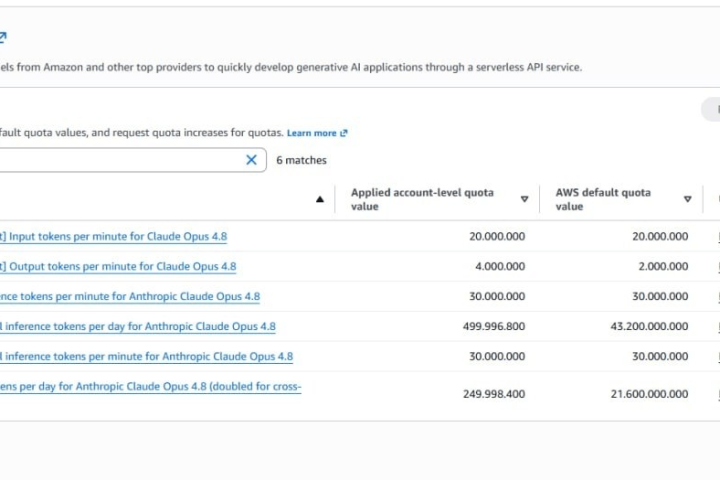
Buy Amazon AWS Account
Amazon Web Services accounts with preloaded credits and root access, including Bedrock ready options across twenty plan tiers.
From $20.00
Buy Microsoft Azure Account
Azure subscriptions with credits and full portal access, covering tenants, resource groups and the quotas that matter before you deploy.
From $25.00
Buy Google Cloud Account
Google Cloud Platform accounts with preloaded credits and console access, sized for everything from a first project to production workloads.
From $60.00
Keep reading

Cloud Pricing
How cloud credits work, and what expires first
Credits are simpler than they look and have more edges than people expect. Four rules cover almost every question about them.

Microsoft Azure
How Azure pricing works: meters, reservations and the savings plan
Azure has four ways to pay for the same virtual machine. Picking the right one is worth more than picking the right size.

Google Cloud
Google Cloud pricing explained: sustained use, committed use and per second billing
Google Cloud gives discounts you did not ask for and charges for things you did not notice. Both behaviours follow rules worth knowing before the first invoice.